How to Eat like a Local in Puglia

Travelling to foreign countries opens so many doors. You can experience exotic climates, uncover cultural attractions and – perhaps most importantly for the foodies out there – you can dine exciting foreign cuisine. Here at Villa Plus, we’ve started a new project – Eat Like a Local – which shows you how to do just that.

We’ve partnered with a bunch of the UK’s best cookery schools to give you five recipes which’ll really give you a taste of Italy’s Puglia region. When you’re on a self-catering holiday in Puglia, you’ve got the chance to whip up some of the region’s most revered dishes – all from the comfort of your villa’s kitchen! Read five cookery school-approved recipes learn how to really Eat Like a Local.

L’atelier des Chefs – squid ink linguine with parsley

This London-based cookery school recently earnt TripAdvisor’s Certificate of Excellence, partly due to their exquisite level of expertise when it comes to cooking.

L’atelier des Chef’s squid ink linguine with parsley

Here’s head chef Chris Marriott’s take on a classic Italian dish…

Ingredients:

500g linguini
Coarse salt
1 squid ink sachet
500g baby squid
1 garlic clove bulb
A bunch of washed, flat parsley
Black pepper
6 pinches of fleur de sel
100ml dry white wine
2 tomatoes
1 shallot
Olive oil

Method

  1. Separate the squid’s body from the tentacles and head. Remove any cartilage, rinsing the squid tube under cold water to remove grit. Slice the body into half-centimetre thick rings.
  2. Peel and finely chop the garlic, remove the parsley leaves from the stalks and then finely chop them. Peel the tomatoes, cut them in half then remove the seeds and dice the flesh. Peel and finely chop the shallot.
  3. Boil a large saucepan of salted water, add the linguine and cook for six minutes.
  4. Heat some oil a frying pan on a moderate heat and fry the squid for four minutes. Season with salt and pepper, then add the garlic and parsley. Cook until the squid is golden brown then remove it from the pan. Add the shallots and deglaze with white wine.
  5. Put the squid ink in the pan along with the linguine. Cook until al dente, adding a little water if necessary. Return the squid to the pan to warm through. Serve up, topping the linguine with fresh tomato and a sprinkling of parsley.

Stay up to date with L’atelier des Chefs on their website and Instagram.

Beverley Glock Cookery School

Food writer Beverley Glock’s Buckinghamshire cookery school uses locally sourced, seasonal ingredients to make dishes you can easily repeat in your own home.

Beverley Glock Cookery School – aubergine parmigiana

Here’s how to make succulent aubergine parmigiana – the Beverley way.

Ingredients:

Olive oil
1 large onion
2 garlic cloves
1kg fresh plum tomatoes, skinned and chopped
3 large aubergines
500g mozzarella cheese, ripped into pieces
100g flaked parmesan cheese
1 bunch fresh basil
Sea salt and pepper

Method

  1. Heat the oil in a large pan, then fry the onion and garlic over a medium heat until soft.
  2. Add the chopped tomatoes, seasoning with salt and pepper before putting a lid on and leaving to simmer for 15 minutes.
  3. Preheat the oven to gas 3/170 degrees Celsius, then slice the aubergines in slices roughly 1cm thick.
  4. Brush the aubergine slices with olive oil, then fry them on a frying pan or griddle until they’re golden brown. Drain them on kitchen roll.
  5. Line a deep casserole with one layer of aubergines, followed by one of tomato sauce. Sprinkle with seasoning, basil leaves, torn mozzarella and parmesan flakes. Repeat for two to three layers.
  6. Cover with a lid and bake for between 45 minutes and one hour until the cheese is golden and melted on top with a bubbling tomato sauce underneath.
  7. Serve with crusty bread and green salad.

Stay up to date with Beverley on her blog and Twitter.

Exeter Cookery School

In 2000, Brits Jim and Lucy Fisher moved to France and set up their cookery school, CookinFrance. Following its success, they decided to move back to the UK in 2016, setting up Exeter Cookery School, sharing their passion for all things gastronomy with the county of Devon.

Exeter Cookery School – orecchiette with ragu sauce

Orecchiette, or ‘little ears’ as they’re sometimes known, are a hallmark of Puglian cuisine. They’re often served with a gutsy tomato-based sauce, just like this ragu…

Ingredients – ragu sauce:

1 tablespoon olive oil
1 medium onion, diced
1 stalk of celery, diced
1 carrot, diced
3 cloves of garlic, peeled and finely chopped
500g beef or lamb mince
6 ripe vine tomatoes, diced
The juice and grated zest of half an orange
1 sprig of rosemary, finely chopped
1 bay leaf
Salt and freshly ground black pepper
Half a glass of good dry white or red wine

Ingredients: orecchiette

300g plain flour/ strong bread flour or durum wheat flour
2 medium eggs
5 egg yolks
1 level teaspoon of salt
1 tablespoon olive oil
Flour for dusting

Method

  1. Warm the oil in a roomy saucepan, then add the onion, celery, carrot and garlic. Sweat for five to ten minutes over a gentle heat until the onions become translucent.
  2. Meanwhile, fry the mince in a little oil in a big frying pan until brown, stirring occasionally and breaking up the clumps
  3. Add the mince to the onion mixture then add the remaining ingredients. Bring to a gentle simmer and cook for at least two – but preferably four – hours. Add some water from time to time if the sauce looks a little dry.
  4. Once its cooked, taste and add more salt if necessary.
  5. Tip the flour onto the work surface and make a large well in the centre. Pour in the eggs, egg yolks, salt and olive oil. Use either your fingers or the tines of a fork to bring the flour into the eggs until you have a stiff – but not too sticky – dough.
  6. Sprinkle both your hands with flour, then knead the dough for about five minutes until it becomes smooth and elastic. Wrap it in clingfilm and put it in the fridge to rest for half an hour.
  7. Pull off a tangerine-sized lump of dough, the re-cover the remaining pasta. Shape into a 1cm thick ‘snake’ then cut into 1cm pieces.
  8. Use the tip of a table or butter knife to smear the piece of dough on the un-floured worktop, maintaining a firm pressure at all times. The dough should roll up with its concave facing you. Pull this off the knife and turn it inside out, before sprinkling it with flour and setting it aside. Repeat with the remaining dough.
  9. Allow the orecchiette to dry for 30 minutes before cooking in plenty of boiling, well-salted water for three minutes (or until cooked through).

Keep up to date with Exeter Cookery School on Twitter and check out their website here.

Lemon & Soul Cookery School

Based in Hampshire, Lemon & Soul offer a range of classes to suit all ages, abilities and taste buds. The owner, Katarina Broadribb, draws influences from her Slovakian heritage as well as a large number of other countries.

Lemon & Soul Cookery School – ragout with wild mushrooms

Whet your appetite with Katarina’s recipe for ragout with wild mushrooms…

Ingredients:

500g beef brisket
350g pappardelle
3 tablespoons olive oil
2 fennels, sliced
1 red onion, sliced
1 carrot, diced
3 garlic cloves, crushed
150ml full bodied red wine
150ml beef stock
4-5 tablespoons tomato puree
25g dried wild mushrooms
Sage, bay leaf
Parsley, finely chopped
Salt and pepper

Method

  1. Heat the oil in a large pan and brown the brisket in one piece till seared. Set aside.
  2. Heat more oil in the pan and soften the fennels, leeks, onion, carrot and garlic for 12-15 minutes or until soft. Set aside.
  3. Preheat the oven to 130 degrees Celsius and place the meat, sautéed vegetables, tomato puree, sage and bay leaf in a large tray. Cover with red wine and stock, cooking for a further three to four hours until the meat is tender.
  4. Remove the meat and shred using two forks.
  5. Soak the mushrooms in a small bowl for at least 10 minutes and add to the tray with vegetables
  6. Cook the pasta until it’s al dente, season to taste and stir through the pasta.

Follow Lemon & Soul on Twitter and get exclusive recipes from their website.

The Cooking Academy

Founded by Kumud Gandhi, The Cooking Academy teaches people how to prepare and cook worldly foods in both creatively and professionally, while also teaching pupils the health benefits of each and every dish. Classes range from small, family-friendly sessions to corporate training for hospitality workers.

The Cooking Academy – bacon, tomato and olive orecchiette

Red meat and tomatoes are a staple of Puglia’s cuisine, and as you can from this recipe, the essence of many dishes.

Ingredients:

4 slices of bacon, cut into inches
1 tablespoon olive oil
1 red onion, thinly sliced
½ a tablespoon chilli flakes
2 garlic cloves, crushed
1 can chopped tomatoes
Handful of black olives
400g orecchiette pasta
Grated parmesan for serving
Salt and pepper to taste

Method

  1. Heat a tablespoon of olive oil over a medium heat. Add the chopped bacon and cook for around four minutes, or until it begins to brown.
  2. Add the chopped onion, cooking until soft for 3-5 minutes. Throw in the crushed garlic and chilli flakes, cooking for a further minute.
  3. Add the tomatoes and season with salt and pepper.
  4. Bring the sauce to the boil, reducing to a simmer and cooking for a further 15 minutes or until the liquid is slightly reduced.
  5. Meanwhile, boil a large pan of water and cook the pasta until al dente. Drain and return back to the empty pan.
  6. Add the sauce to the pasta, cooking over a medium heat and coating the pasta in sauce. Add olives and heat them up for a few minutes with the sauce.
  7. Serve with grated parmesan.

Keep up to date with The Cooking Academy on Twitter and check out their website.

Good snorkelling holidays for villa-loving travellers

Holiday rentals provide the perfect basecamp for snorkelling getaways. Hiring a villa gives you the freedom to prepare your own packed lunches and dinners, and you’ll have plenty of room to store your snorkels, flippers and wetsuits.


Image by Lance, used under CC License (CC by 2.0

Good snorkelling holidays unlock a country’s most enthralling secrets. Pack your underwater camera and get ready to delve deep in some of these top destinations…

Costa del Sol, Spain

Costa del Sol is blessed with tepid waters bustling with marine life. On top of that, there’s plenty of sun-kissed beaches where you can set up camp before a few hours of snorkelling. Visit Maro beach, near the town of Nerja, and try to find its fascinating underwater cave if you’re feeling daring.

The shores surrounding Las Yucas and La Viborilla beaches, near Benalmadena, house a wide range of fish such as tuna, bonitos, and dolphinfish.

Costa Blanca, Spain

Like Costa del Sol, the Costa Blanca is a snorkelers’ paradise. Explore the region’s shorelines and you’ll quickly find that it’s simply brimming with underwater life. Granadella Cove, near Javea, has notoriously clear waters. Not only that, it’s quite sheltered so younger snorkellers can see the bay’s treasures, too.

The Algarve, Portugal

Portugal’s Algarve coast comprises playful Atlantic waters and warming sands. It’s also home to the famed Ria Formosa lagoon, one of the country’s many natural wonders. Here you’ll find one of the largest populations of seahorses in the world – wipe down your face mask and prepare to dive amongst them.

Cyprus

If you visit Cyprus during summertime, you might encounter beautiful green and loggerhead turtles on the island’s western coast. The island’s Cape Greco National Park is well worth a visit, too, complete with some of the clearest waters in the region and picturesque in every sense of the word.

Corfu, Greece

The Greek island of Corfu has plenty of spots for a good snorkelling holiday. Its pebbly beaches tend to have clearer waters, but you might want to wear a wetsuit or flippers to protect your feet from the jaggier rocks! Keep your eyes peeled for a diverse range of silverside fish, alongside flathead mullet and painted combers.

Pula, Croatia


Image by Christoph Sammer, used under CC License (CC by 2.0)

Croatia’s idyllic Adriatic coastlines are the envy of the world. Pula houses some of its finest and along with these renowned views, it has a number of great snorkelling spots.

Take Brijuni National Park, a short boat journey from Pula. The waters of these 14 small, protected islands are alive with flora, fauna and old Roman artefacts. In Verige Bay, on the western coast of the park, you can get a guided tour to explore submerged archaeological sites. Take full advantage and get excited for a day of underwater education.

Whether you’re travelling as a family, with friends or with your partner or spouse, a snorkelling holiday provides an unrivalled way to get to know a country’s ins and outs. Uncover exotic species of fish or simply paddle around and let the waves wash over you – underwater getaways are always ones to remember.

Have a look at some of the Villa Plus offerings in these hotspots and let your snorkelling dreams come to life.

By Isabella Perkins, a freelance travel writer best known for writing about self-catering holidays. Her writing tends to have a family focus, and she is in the middle of writing a new travel guide due to be published next year.

How to Eat Like A Local in Zante

People travel for many reasons – exotic beaches, new cultures and luscious scenery being but a few of them. There’s one reason that pops up increasingly often, though, and that’s indulging in foreign cuisines. Here at Villa Plus, we’re inspired by our customers love of immersing themselves in local food and culture while on holiday. That’s why we’ve launched Eat Like a Local – a partnership with the UK’s top cookery schools geared towards giving you the finest foreign recipes out there.

On self-catering holidays to Zante, the entire gastronomy of Greece falls into your lap. Whether you’re wanting a lighter salad or some fried fish, here’s a selection of dishes from some of the UK’s top cookery schools made to give you a certified taste of this Greek gem.

Cambridge Cookery School

Founded in 2008 by chef and food writer Tine Roche, Cambridge Cookery School staff comprise everyone from Japanese sushi chefs to cordon bleu-trained artisan bakers

Here, Tine sheds some light on how to make a delicious (and easy) melitzanosalata.

Cambridge Cookery School’s melitzanosalata

Ingredients:

4 large purple aubergines
1 lemon – juiced
2 garlic cloves – grated or crushed
Sea salt and ground pepper
125ml olive oil
Dried thyme
Black olives

Method

  1. Preheat the oven to 200 degrees Celsius, halve the aubergines lengthways, then place them face up on a large baking tray.
  2. Drizzle with olive oil, garlic and a little thyme, then season liberally with salt and pepper.
  3. Bake for 30 to 40 minutes until soft.
  4. In a large bowl, mash the aubergines with a fork, then a wooden spoon to incorporate air and make a fluffy cream. Taste and add as much lemon juice and salt as you feel it needs.
  5. Arrange onto four separate platters, drizzling with olive oil and placing black olives in the

Keep up to date with Cambridge Cookery School on their website and on Twitter.

Cookery School at Little Portland Street

Rosalind Rathouse founded Cookery School at Little Portland Street in 2008. The school trains chefs to cook Mexican, Indian and Spanish cuisine, amongst many other delicacies – including those from Greece.

Whet your appetite a little further with their calamari fritti recipe.

Cookery School at Little Portland Street’s calamari fritti

Ingredients:

500g calamari (preferably tentacles) cleaned and cut into rings
2 cups of flour or semolina
½ a teaspoon of salt

Method

  1. Season the flour with salt and mix well, then use it to coat the calamari.
  2. Heat the oil in a dry, deep sided saucepan to prevent it from splashing.
  3. When the oil is sufficiently hot, add the calamari. You can test if it’s hot enough by adding a small piece of bread into the oil. If it browns quickly, then you’re ready to fry the calamari.
  4. Fry a handful of calamarai at a time so that the oil temperature isn’t reduced, and the fish crisps up well. Once it turns a light golden colour, remove them from the oil with a slotted spoon. By cooking them quickly they’ll remain tender, but still be crisp.
  5. Serve with pieces of chopped, fresh lemon.

Find out more about Cookery School at Little Portland Street on their website and follow them on Twitter.

Manna from Devon Cookery School

Ran by David Jones and his wife Holly, Manna from Devon Cookery School specialises in wood-fired cooking, fish cookery and breadmaking, alongside taking guests on foodie adventures across Europe.

Manna from Devon Cookery School’s Zakynthos-inspired slow-cooked octopus

Here’s David’s recipe for slow-cooked octopus…

Ingredients:

1kg cleaned octopus, squid or cuttlefish
1 green pepper
15ml olive oil
2 cloves of garlic, peeled and crushed
2 red onions, peeled and thinly sliced
180ml red wine
600ml chicken or shellfish stock
30g cornflour
30g pitted and chopped black or green olives
1bsp chopped fresh parsley leaves
Salt and pepper

Method

Salt and pepper

  1. Heat the oven to 150 degrees Celsius, gas mark three.
  2. Slice the octopus (or squid or cuttlefish) into 1cm strips.
  3. Mix all the ingredients together in a large ovenproof pan and season well with salt and pepper.
  4. Put the lid on the pan so it’s well sealed, put it in the oven and shut the door.
  5. Come back in two hours, take the lid off the pan and test that the octopus has become tender. If it needs a bit longer, put the lid back on the pan and cook until it’s ready.
  6. When it is, sprinkle a little more chopped parsley over the slow-cooked octopus and serve with good bread and a green or tomato salad.

Stay up to date with Manna from Devon Cookery School on their blog or follow them on Instagram.

Philleigh Way – baked feta

Philleigh Way is a Cornwall-based cookery school and restaurant ran by brothers-in-law James Martin and chef George Pasco.

The school is inspired by generations of old Cornish recipes, but this time, they’ve tried their hand at Greek baked feta…

Philleigh Way’s baked feta

Ingredients:

200g feta cheese
1 pinch of dried red chilli flakes
Extra virgin olive oil
A handful of finely chopped oregano leaves
Two cloves finely sliced garlic
A handful of sliced cherry or plum tomatoes
1 tablespoon of tomato puree
½ a tablespoon of capers
½ a red onion, finely sliced
A handful of torn basil leaves
A handful of Kalamata black olives

Method

  1. Heat the oven to 200 degrees Celsius, gas mark six.
  2. Tear off a large section of tin foil, place the block of feta in the centre and assemble the rest of the ingredients on top
  3. Pull up the sides of the foil and crimp along the top, forming an airtight pouch.
  4. Place on an oven tray and bake for 12 minutes. Serve with warm crusty bread to mop up the juices.

Check out Philleigh Way’s website and follow them on Twitter.

Avenue Cookery School – chickpea salad

Established in 2004, The Avenue Cookery School is a family-run school, teaching students to scrap the cookery books and use them only as a means of inspiration.

With a recipe for chickpea salad this good, they must have been inspired by the best…

Avenue Cookery School’s Chickpea Salad

Ingredients:

20ml olive oil
150ml cider vinegar
1 red chilli
2x 400g tins of chickpeas
6 cloves of garlic, pureed
1 bunch of fresh chopped coriander
2 finely sliced onions
1 bunch of fresh chopped parsley
1 bunch of fresh chopped mint
4 finely sliced spring onions
Extra virgin olive oil
100g crumbled feta

Method

  1. Sautee the onions until soft then add the chilli and garlic, cooking for a further two minutes until the garlic is cooked.
  2. Add the vinegar and cook until it has reduced
  3. While still warm, pour over the chickpeas.
  4. Just before serving, mix in the coriander, parsley, mint and spring onions. Season and sprinkle with the feta.

Keep updated with The Avenue Cookery School on their blog and follow them on Instagram.

Ready to take your foodie fantasies to the next level? Look at Villa Plus offerings in Zante and get ready to taste the wonders of Greece.


Culture in Cyprus and how to bring it home to your villa

As the third largest island in the Mediterranean, Cyprus is poised with plenty of idyllic sunspots and a rich and insightful past. Scenery and history aside, you’ll quickly find that Cypriots embody a vibrant culture which you’ll never forget.

Culture in Cyprus is often based around strong family values and a mixture of regional traditions. Live like a local and immerse yourself in the customs of the Cypriots, that way you can bring a few home on your return.

Whether at the dinner table or on a makeshift dancefloor, here’s how you can enjoy Cyprus’ culture from your holiday rental’s living room.

Adopt Cypriot values

In Cyprus, social structures centre on the direct and extended family. Grandparents and grandchildren develop strong bonds and spend a lot of time together – usually at mealtimes or weekends.

For the ultimate getaway, bring your extended family with you on your villa holiday and share a larger property together. That way you can spend some real quality time with each other, sharing the secrets of this magical island with your loved ones.

Elders are treated with a great deal of respect in Cyprus and the oldest person in a group is usually served first at a meal. Honour this custom to make parents and grandparents feel extra special and add a real loving touch to dinner times.

Enjoy local delicacies

Heavily influenced by Greek, Turkish and recipes from the Middle East, Cyprus is famed for its succulent cuisine. Households can be found sitting under the burning Mediterranean sun enjoying platters of mezes and sharing a few cold drinks. Trying local food is one of the best ways to experience any culture, but to develop a true understanding, have a shot at cooking dishes yourself.

To bring Cypriot culture to your villa, whip up a variety of meze platters. Similar to tapas, meze is a popular aspect of Cypriot and Greek culture, with groups of locals tending to order a large collection of small, meze plates to share.

Prepare a simple green salad with some plain yogurt on the side, make your own hummus, grill a tasty fish and some halloumi to nibble on the side. Go meatier and serve up homemade kebabs or pork ball keftedes. For a sure-fire addition to the table that everyone will love, buy a loaf of bread and dip slices into olive oil.

…then have a good song and dance!

Thanks to the country’s flourishing arts scene, enjoying traditional Cypriot music and dance is an easy and enjoyable way to bring the country’s culture back to your villa. There’s a huge amount of talented Cypriot musicians – why not buy a compilation album and give it a spin one evening when you’re there?

Better yet, get everybody up and dancing. Learn some new moves to accompany Cypriot dances like the syrtos, ballos and tatsia, or gather everyone in a circle and do your own rendition of the sousta dance.

Ready to embark on your own Cypriot adventure? Have a look at some of the Villa Plus properties in the country.

By Isabella Perkins, a freelance travel writer best known for writing about self-catering holidays. Her writing tends to have a family focus, and she is in the middle of writing a new travel guide due to be published next year.

Best drinks for your self-catering holiday to Croatia

By Shaun Fraser

Croatia has some exceptional drinks that you can’t leave the country without trying. If you’re planning a self-catering trip to Croatia, you’ll be able to sample authentic Adriatic flavours without spending a fortune in the hotel bar. Furthermore, the best Croatian drinks aren’t included in most package holiday deals – so you won’t be missing out by choosing self-catering.

Croatian wine
Image by ironypoisoning, used under Creative Commons license (CC BY SA 2.0)

In the privacy of your villa’s terrace, you can sip on chilled beer as you wind down after a busy day of sightseeing. Or, enjoy some rich fruit spirit aperitifs before you sit down to a delicious homemade meal. Tempted? If so, here are some Croatian drinks for you to sample:

Rakia

This fruit brandy is Croatia’s most popular spirit. It’s strong, and often home-brewed, but you’ll also find it to buy if you want to take some back to your holiday home.

Croatian Rakia
Image by pinguino, used under Creative Commons license (CC BY 2.0)

Rakia comes in a wide range of flavour varieties. Sljivovica, the most traditional, is made with plums, and found largely in the north of the country. Other common types include lozovaca, which is made from grapes, and the pear-based kruskovac.

Pelinkovac

A bitter-tasting liqueur like Jägermeister, Pelinkovac is a popular drink throughout Croatia, and there are many local brands you can try. Renting an apartment in Split? Dalmacijavino is the favourite variety there. If you’re staying in a villa in northern Croatia, near Zagreb, look out for Badel Pelinkovac.

Biska

Croatia’s Istrian peninsula produces biska. This unique liqueur is made using mistletoe leaves and herbs. It’s been around for thousands of years, and locals are adamant supporters of its medicinal effects. For a true Croatian experience, serve cold, and drink it as an aperitif.

Bambus

This odd but easy and sweet drink is well-loved in Croatia and some surrounding countries. It consists of a half-and-half mix of red wine and cola. Mix one up in seconds in the kitchen of your rental accommodation for a refreshing fizzy drink to enjoy in the sun.

Wine in Croatia

Croatia is an up-and-coming wine producer, and oenophiles are sure to enjoy the different varieties on offer. There are tens of thousands of vineyards, and hundreds of wineries, so you’re bound to find something to suit your tastes.

Istria is a predominant wine region, and white Malvazija is one of its best known products. The island of Korcula, off Croatia’s southern tip, is also home to some delicious, light white wines.

For red, the best quality wines are made in Dalmatia. The full bodied Bavic is amongst the region’s most popular types. Lookout for the Plavac wines if you feel like treating yourself to a luxurious, premium variety.

Beer in Croatia

Two brands dominate the Croatian beer scene: Ožujsko and Karlovačka. Both come in a range of different flavours. You’ll find these on sale in shops and bars everywhere in Croatia, so wherever you’re staying, they won’t be hard to get your hands on.

For local specialities and craft beers, there is also plenty on offer, especially around Zagreb. Here, you’ll find a number of microbreweries, and the two beers produced by the esteemed Lika Brewery.

Inspired? Take a look at the different types of property Villa Plus offer.

Shaun Fraser is a former drinks rep, who now focuses on writing about his favourite tipples from Europe and beyond. He credits his good nose to a previous life as a sommelier.

Walking holidays in Lanzarote – spectacular routes for villa holidays

Lanzarote’s rugged coasts and otherworldly national parks are made for walking. Whether you’re on a family getaway or an intrepid hiking adventure with your partner, this Canary island gem’s spectacular interiors stretch from the shores of Playa Blanca on to the Timanfaya National Park, then northwards to the Mirador del Rio and back again. To put it simply, walking holidays in Lanzarote open you up to the best of Spain’s allures beyond the mainland.

Timanfaya National Park


Image by Son of Groucho, used under CC License (CC by 2.0)

When most people think of Lanzarote, the arid Mars-like hills and volcanos of Timanfaya National Park are the first images that spring to mind. It’s a far cry from the idyllic beaches which line popular towns like Playa Blanca and Matagorda, but still equally tranquil in its own, perhaps more wild, way.

Unescorted walking isn’t permitted here, but there are a number of tours which you can easily book onto. Buses run frequently from El Diablo, an unusual restaurant that grills food using volcanic heat, to the Ruta de los Volcanoes. This will take you through the vast craters of Montanas del Fuego (aka the “Fire Mountains”) – a spectacle in their own right.

The Ruta de Tremesana tour runs a few times a week, taking participants across lava fields with commentary from a supervisory ranger. It’s geared towards walkers with moderate fitness levels, and it’s recommended that you bring sturdy boots which you feel comfortable in, along with a good supply of water. Luckily, Timanfaya National Park is just a short drive from Playa Blanca and easily accessible from the island’s other hotspots.

Mirador del Rio

For something a little tougher, hike to the clifftop structure named Mirador del Rio. Start by driving to the village of Ye, situated just north of Corona Forestal Nature Reserve. It takes around an hour and a half to get to Ye from the island’s southern tip, so drives here and back are easily achievable within a day.

From Ye, you can park and walk to all the way to the Mirador del Rio viewpoint. The walk itself is littered with panoramic vistas looking over the Atlantic Ocean, but keep your eyes on the path ahead and save yourself for the far-stretching scenery yet to come.

Mirador del Rio’s tip is like something out of a James Bond movie, complete with a café and bar which overlook La Graciosa, a volcanic island located around two kilometres from Lanzarote. In true Bond fashion, order a martini (shaken, not stirred) and soak up the Canarian vistas before heading back.

Playa Blanca

You don’t need to go to rural regions to enjoy walking holidays in Lanzarote. Start from the Playa Dorada beach in Playa Blanca, then follow the promenade towards the harbour and along the nearby coast. Continue along until you reach the lighthouse, then make your way back to the bustling bars and restaurants that make up this coastal town.

If you’re feeling a little more adventurous, you can always continue towards Punta del Papagayo, the southernmost tip of Lanzarote. It’s a 10-kilometre walk, though, so you might want to arrange for a taxi to take you back into town. The area surrounding Playa Blanca is both beautiful and simplistic. You can step out the front door of your villa and wander aimlessly along the shoreline, simply letting the cool Atlantic breeze wash over you as you take in this rich, varied setting.

Take the next steps in planning your Lanzarote walking holiday and look at some of the properties Villa Plus offers on the island.

By Isabella Perkins, a freelance travel writer best known for writing about self-catering holidays. Her writing tends to have a family focus, and she is in the middle of writing a new travel guide due to be published next year.

Villas with table tennis – how to make the most of your facilities

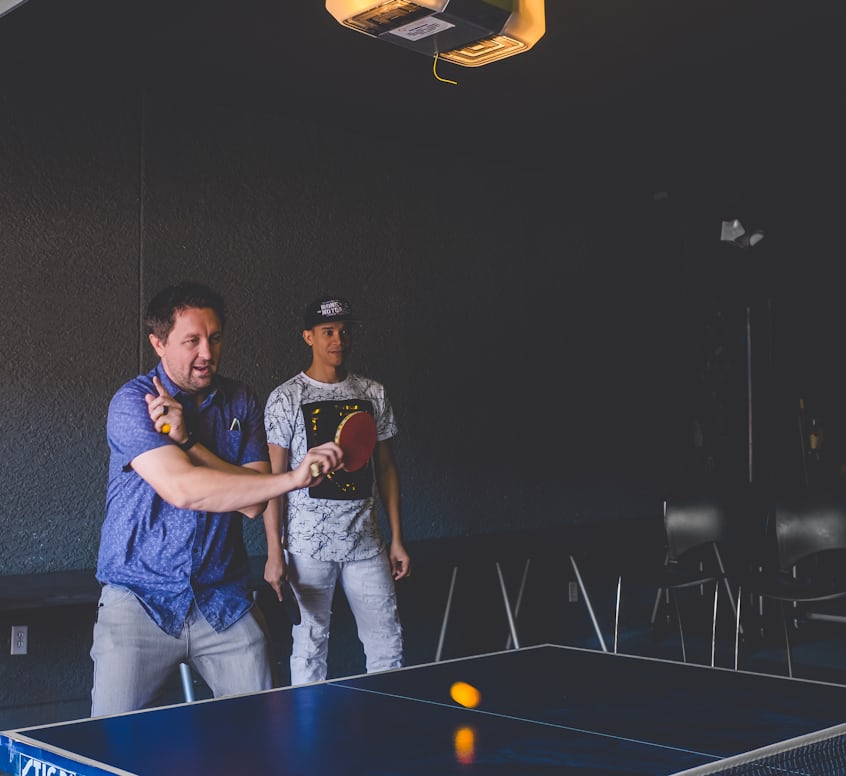
 Few sports are as easily accessible as table tennis. You don’t need lightning-quick reflexes or the hand-eye coordination of Andy Murray to enjoy the rush of a good ping pong rally – just a little perseverance and the right facilities. Luckily, villas with table tennis tables are easy to come by. Here’s how to make the most out of them with three fun games.

Image by NeONBRAND on Unsplash

1. Round the world ping pong

If you’re holidaying in a bigger property with friends or family, then get everyone up and active with this fast-paced, inclusive variation on traditional table tennis. You’ll need one ball and a minimum of two bats, although if everyone playing is able to have one, then it’ll make the game that little bit easier.

Form a circle around the table tennis table. One player starts by hitting the ball across the table, before proceeding to move clockwise around it. The aim is to keep a rally going without making any mistakes, all the while continuing to rotate around the table in a circle.

Each participant starts with five points, and they lose points when the ball goes out of play on their turn. Players are disqualified when they lose all their points, so keep your wits about you and battle it out until you’re the last one standing!

2. Single-player ping pong

Let’s say that a fellow table tennis aficionado can’t quite tear themselves away from the poolside lounger (they’re on a relaxing villa holiday, after all), but you want to get a few rallies in before dinnertime. Not to worry, just play against yourself.

Fold one half of the table up 90 degrees so it forms a vertical wall which you can hit a ball against, then lock it in place. Don’t attempt to do this alone, though – ping pong tables are heavy, and you don’t want to risk injuring yourself.

Once everything’s in place, brush up on your topspin or nail that forehand smash once and for all. Who knows, maybe those extra few hours practice could be what it takes to make you the formidable player you’ve always dreamt of becoming.

3. Ping pong squash

Combine two much-loved racket sports and get ready to really utilise all of your reflexes. Place the table against a wall, with the net remaining at a 90-degree angle to the wall. With one other player stood by the opposite side of the net, hit the ball off the wall so that it ends up bouncing on their side. Play out the rally until one person either misses the ping pong ball or bats it out of play.

Things can really speed up when playing ping pong squash, so don’t be surprised if it takes you a few games to get the hang of it! Once you’ve cracked it, though, you’re in for endless hours of entertainment, honing coordination skills that’ll serve you well in other ball games.

Of course, you can’t go wrong with a traditional game of ping pong. Set aside a few hours with an opponent and smash, backhand and spin your way to 21 points.


Image by Porsche Brosseau, used under CC License (CC by 2.0)

Ready to smash and spin your way through a ping pong-filled holiday? Look at Villa Plus propertiesand find one which suits you.

By Lara Scott. A former executive at a major hotel chain, Lara Scott is a freelance travel writer and journalist. She says her previous career gives her extra insight into both sides of the tourism industry.

Crete holidays – cheap things to do on a self-catering break

 The Greek island of Crete is among the world’s most beloved holiday destinations. The chances are you’ll know it for its sun-splashed resorts and world-class nightlife. But there’s far more to Crete than Preveli Beach and Heraklion’s strips – it’s also a hotspot for culture and history, home to awe-inspiring Aegean ruins and gripping museums.

Best of all? It’s a fantastic destination for a budget holiday. You can keep Crete holidays cheap by booking a self-catering holiday home, and enjoying activities like these…

Hit the beaches

Crete isn’t short of pearlescent beaches. In the summer months, the sea is reliably balmy and therefore perfect for a spot of swimming, particularly in the bays surrounding Istron. For a cheap beach day, load up on snacks in your holiday villa, pack a few towels, a beach umbrella, a snorkel and lots of sun lotion, then head to your nearest stretch of sand.

Popular beaches include Balos, near Chania, and Bali, which is close to Rethymnon. You can typically rent sunbeds and umbrellas for a few euros – a small price to pay if you’d rather relax in the shade from time to time.

Serve up a traditional Greek feast

Greece is known for its cuisine, and a holiday to Crete wouldn’t be complete without sampling some local delicacies. To save some of your hard-earned pennies, make the most of your self-catered accommodation by preparing a Greek banquet at home.

Start with traditional dips like tzatziki and taramasalata. For an easy main, make some pork or chicken souvlaki – chunks of meat on skewers which are grilled or barbequed, then served with warm pitta. If you can get your hands on ready-made filo pastry, another easy main is spanakopita (spinach and feta pie).

For dessert, put together a platter of local Cretan cheeses, fruit, and fresh baklava from a local bakery.

Visit attractions for free

Most of the major attractions on Crete have an entry fee, but depending on when you travel it’s possible to save money. Throughout March, many historic and archaeological sites around the island offer reduced ticket prices – the fascinating Heraklion Archaeological Museum can be visited for as little as five euros.

During the peak season, on International Monument Day and International Museum Day, certain attractions are completely free.

Pack a picnic and go wandering

If you’re the adventurous type, then spend a day exploring the Cretan wilderness. Keep an eye out for Cretan shrews, badgers, and martens. One of the best places for nature is the park surrounding the White Mountains, which are known locally as Lefka Ori. It’s situated on the west of the island, in the Chania region. Here you’ll find the beautiful Samaria Gorge, one of Europe’s longest gorges, and of course the White Mountains themselves.

Stay safe and make sure you wear good walking shoes and sun lotion, then pack a nutritious picnic (fruit, nuts, cheese and water are a must) to keep you going along the way.

Inspired? Browse Villa Plus rentals in Crete and take the first step towards your big Greek adventure.

By Isabella Perkins, a freelance travel writer best known for writing about self-catering holidays. Her writing tends to have a family focus, and she is in the middle of writing a new travel guide due to be published next year.

5 holiday travel games for a savvy self-catering getaway

Holiday travel games are an essential for any self-catering getaway, particularly if you have young kids. Be a savvy holidaymaker, load up the suitcase with a few portable games and bring some extra fun to your rental accommodation.

These five holiday travel games are guaranteed to keep the spirits high and laughter flowing. Not only that, they’re all easily portable, so they won’t take up too much room in your suitcase!

Monopoly Deal

As good as the traditional version of Monopoly is, it’s a little big to travel with. With the more compact Monopoly Deal, this isn’t an issue. It retains the original’s much-loved qualities and packs them all into a thrilling card game.


Image by Ceres B, used under CC License (CC by 2.0)

Monopoly Deal is fast paced, putting you in the role of a property developer juggling cash reserves and trying to dominate the board. Go from nothing to an entrepreneur and make sure you don’t slip up along the way! Charge rent, swap cards or make tactical deals and trades. Play this game with anywhere between two and five people.

Bananagrams

Similar to Scrabble but without the board, Bananagrams sets you up for hours of holiday fun. Race your opponents to build word-filled crossword grids and get rid of all your pieces. It’s simple, frenetic and all about forming words quickly.

When the game’s finished, look back over your creations for any misspellings. Whoever has the most correctly spelt words, wins!

Uno

No family holiday is complete without a few rounds of Uno. This addictive card game is for two or more players and isn’t hard to pick up, so most people can join in.

The objective of Uno is easy enough – get rid of your cards first and you win. Every player starts with seven cards (dealt face down). Match numbers, colours and sets with the card on the designated ‘discard pile’ to lose the hand you’ve been dealt.

Yahtzee

Yahtzee works well with anywhere between two and six players. The game balances luck with daring nerves of steel. With five dice, take turns to roll combos and try to get the highest score possible. Its brilliance comes into play by the fact you have three turns each – do you risk your three sixes for a full house, or your full house for five sixes?

As far as villa holiday games go, Yahtzee is a must, and will keep everyone entertained until long after the sun sets.

Checkers


Image by Ciara McDonnell, used under CC License (CC by 2.0)

Small, easily-packed checkers travel sets were made for beach and villa holidays. Checkers, also known as draughts, is a strategic board game which brings out a competitive edge in most players.

Advance in diagonals to take your opponent’s pieces, but beware – one wrong move can seriously ruin you. If you strike lucky you’ll be able to jump, or take, more than one of your opponent’s pieces in a row. The winner is the first person to eliminate the other player’s pieces.

Taking at least a few travel games should be an essential on any holiday packing list. With all that in mind, which beguiling country would you like to take them to first?

By Isabella Perkins, a freelance travel writer best known for writing about self-catering holidays. Her writing tends to have a family focus, and she is in the middle of writing a new travel guide due to be published next year.

Eating out in Zante: 5 reasons self-catering beats restaurants

People visit Zante for many reasons – world-famous beaches and quaint old towns being but two of them. Thanks to its location, the island has an array of ingredients and culinary specialities that bring in plenty of tourists year after year.

Eating out in Zante is without a doubt a sure-fire way to soak up the island’s vibe. It’s also possible to experience Zante’s charms by eating in and whipping up a few meals of your own, though. Here’s why you should opt to self-cater when you’re there…

You can discover Greek culture

Uncovering Greek culture through locally produced food is both rewarding and wholly delicious. Staying in a holiday rental gifts you the freedom to wander the local markets, purchase tasty home-grown ingredients ripe for Greek cooking and enjoy Zante like a local. There’s an abundance of organic fruits, vegetables, olive oils, honeys and cheeses here – take full advantage and fill your holiday rental’s cupboards with them.


Image by sunny mama, used under CC License (CC by 2.0)

Although eating at a restaurant gives you the chance to try the local cuisine, it’s always fun sourcing your own groceries. On top of that, bulk buying locally grown produce could save you more money which you can spend on Zante’s range of attractions.

Learn Greek recipes

After picking up some fresh ingredients, whip up a classic Greek recipe from the insides of your villa. Start with an easy dish, one which brims with flavour like a Greek salad or tzatziki dip.

Next, step it up and make heavenly Mediterranean meals like lamb kleftiko, moussaka or even skordostoubi (a succulent main course comprising aubergines and spices). By pushing yourself that little bit further, you can keep the holiday tastes alive when you get home with your newfound Greek cooking skills.

Eat mouth-wateringly good homemade packed lunches

Not having to rely on restaurants for meals is a great way to save time and money. With lunch already made, you can travel off the beaten track and uncover new coves and viewpoints on the island.

Try making your own gyros (cooked meat served in flatbread) or souvlakia (grilled skewered meat served on pitta bread). Whatever you decide to make, it’ll taste all the better paired with serene coastline or inland scenery…

Enjoy Zante’s sunspots


Image by Nana B Agyel, used under CC License (CC by 2.0)

Eating your dinner by the foot of Braxionas Mountain or the shores of the Porto Limnionas bay, for example, is simple, fun and guaranteed to create treasured holiday memories. Alternatively, you could rent a property near the beach and enjoy your evening meals at home with tremendous coastal views.

…and always have your way

One of the best things about self-catering villa holidays is the fact that you are always in full control. You don’t have to adhere to set eating times, you can prepare the foods you love and, if one evening you don’t fancy cooking, you can always eat at a restaurant.

Take the first steps towards your Zante adventure and look at holiday rentals on the island.

By Imogen Bishop, a part time travel writer, part time restaurant critic, and full-time mum. She has an affinity for Mediterranean cuisine and can usually be found in the kitchen with a bottle of olive oil in hand.